Add the ingredients, then divide into portions
For each ingredient, calculate grams × calories per 100 g ÷ 100. Add the results before rounding, then divide according to the portion eaten. Pieces, fractions of packs and household measures help without a scale, but the result is only as accurate as the amount estimated.
Select dry pasta when your amount refers to uncooked pasta. For canned ingredients, check whether the value refers to the drained contents. Keep the preparation state consistent between the amount and the nutrition entry.
Sources: FDA: understanding nutrition labels · THL / Fineli: open food data, release 20.0
Worked example: chickpea pasta for four
This is a calculated recipe developed for Calotank. The table lists the ingredients for the whole batch. Use the drained chickpea weight: two packs yielding 240 g each give 480 g in total. Pack sizes vary by manufacturer.
Chickpea and tomato pasta
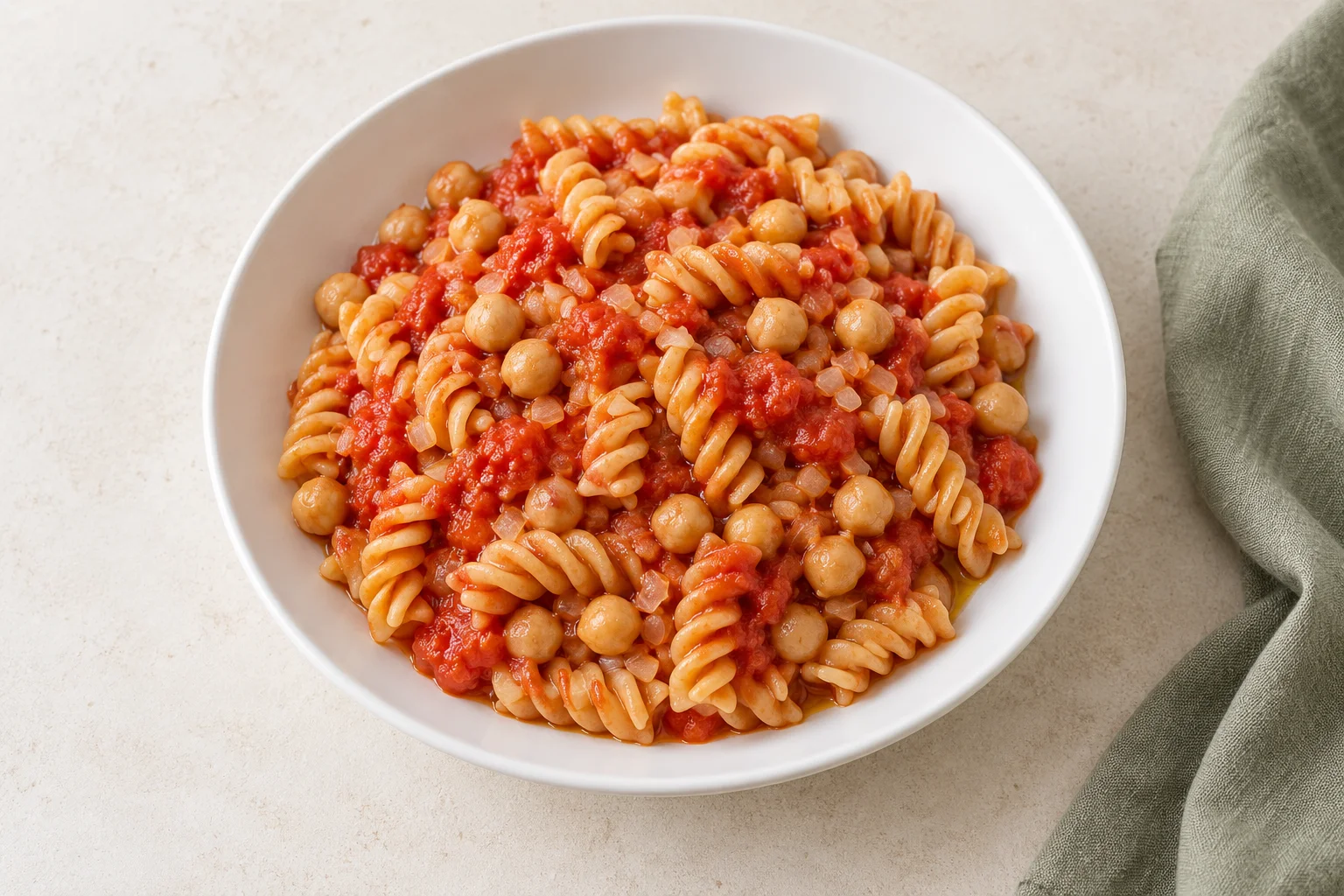
This recipe makes 4 servings.
| Ingredient and amount | kcal | Protein |
|---|---|---|
| Dry pasta, 300 g (3/5 of a 500 g bag) | 1016 | 39 g |
| Chickpeas in water, drained, 480 g (2 × 240 g) | 660 | 40.5 g |
| Chopped tomatoes, 1 can (400 g) | 91 | 2.2 g |
| Onion, about 2 medium (110 g peeled) | 32 | 1.4 g |
| Olive oil, 2 tablespoons (27 g) | 239 | 0 g |
| Total | 2038 | 83.1 g |
Ingredient rounding can cause a small difference between the sum of the displayed rows and the total.
Preparation
Cook the pasta according to its pack and drain. Soften the chopped onion in the oil, add the chopped tomatoes and drained chickpeas, and simmer for about 10 minutes. Mix in the pasta and divide into four equal servings. Season with salt and pepper if desired; extra oil, cheese and bread are not included.
Calculation basis: THL Fineli 20.0, downloaded 22 September 2026. Energy and protein are summed before rounding. Products, portions and cooking losses vary. These are recipe estimates, not laboratory measurements or recommended serving sizes. Fineli · CC BY 4.0
What if the portions are different sizes?
The pasta recipe contains about 2,038 calories in total. Four equal portions provide about 510 each. If you eat one third of the batch, that is about 679 calories. A recipe labelled “serves four” does not make every plate a quarter of the batch.
For an easy estimate, mix the food and divide it among four equal containers. For more precise unequal portions, weigh the finished food without the container. If this batch weighed 1,600 g, a 400 g portion would be one quarter. That weight is a worked example, not a measured cooking yield.
Water changes weight; additions change the total
Cooking water adds no calories but changes pasta weight and calories per 100 grams. Cooking can also remove fat or other ingredients, so not every change is just water. This pasta calculation assumes all listed ingredients and oil are eaten.
Grated cheese, bread and extra sauce oil are not included in the pasta figure. Add them separately if used. With soup, distribute fish and potatoes as well as broth: two equal ladles can contain different amounts of solid ingredients.
Sources: Food Standards Agency: Caloriewise, cooking yield and recipe calculations (appendices 3–4)
Log your portion, not the whole batch
For a quarter of the example pasta, enter “Chickpea pasta” and 510 calories in Calotank. Reuse the quick choice when the recipe and portion stay the same. Website calculations do not transfer to the app automatically.
Explore the calculated salmon soup and tuna salad recipes too. The same ingredient–batch–portion method applies even though the meals look different and take up different amounts of space.
Sources and content
- FDA: understanding nutrition labels
- THL / Fineli: open food data, release 20.0
- Food Standards Agency: Caloriewise, cooking yield and recipe calculations (appendices 3–4)
Sources checked on 5 October 2026. Text and recipe calculations: Calotank. Images are AI-generated illustrations. Recipes are not presented as test-kitchen measurements. General information, not individual nutrition advice. Creator and corrections.