Use the best information that is easy to get
If the label gives calories for one slice or pot, use that. If it only gives a value per 100 grams, use the fraction of the pack you eat: half a 200-gram pot of quark is about 100 grams. Check whether the number refers to the whole pack or one serving.
Without a label, choose the closest matching food and portion in the calculator. A medium banana is an estimate, not a weight shared by every banana. The aim is to describe what you ate, rather than select the lowest calorie result.
Sources: FDA: understanding nutrition labels · NIDDK: food portions and serving sizes
Four familiar portions
The weights below use Fineli household measures. Here a cup means a 240 ml measuring cup, a tablespoon 15 ml and a teaspoon 5 ml. An ordinary mug varies in size. An Australian 20 ml tablespoon, for example, is not the same as the 15 ml measure used here.
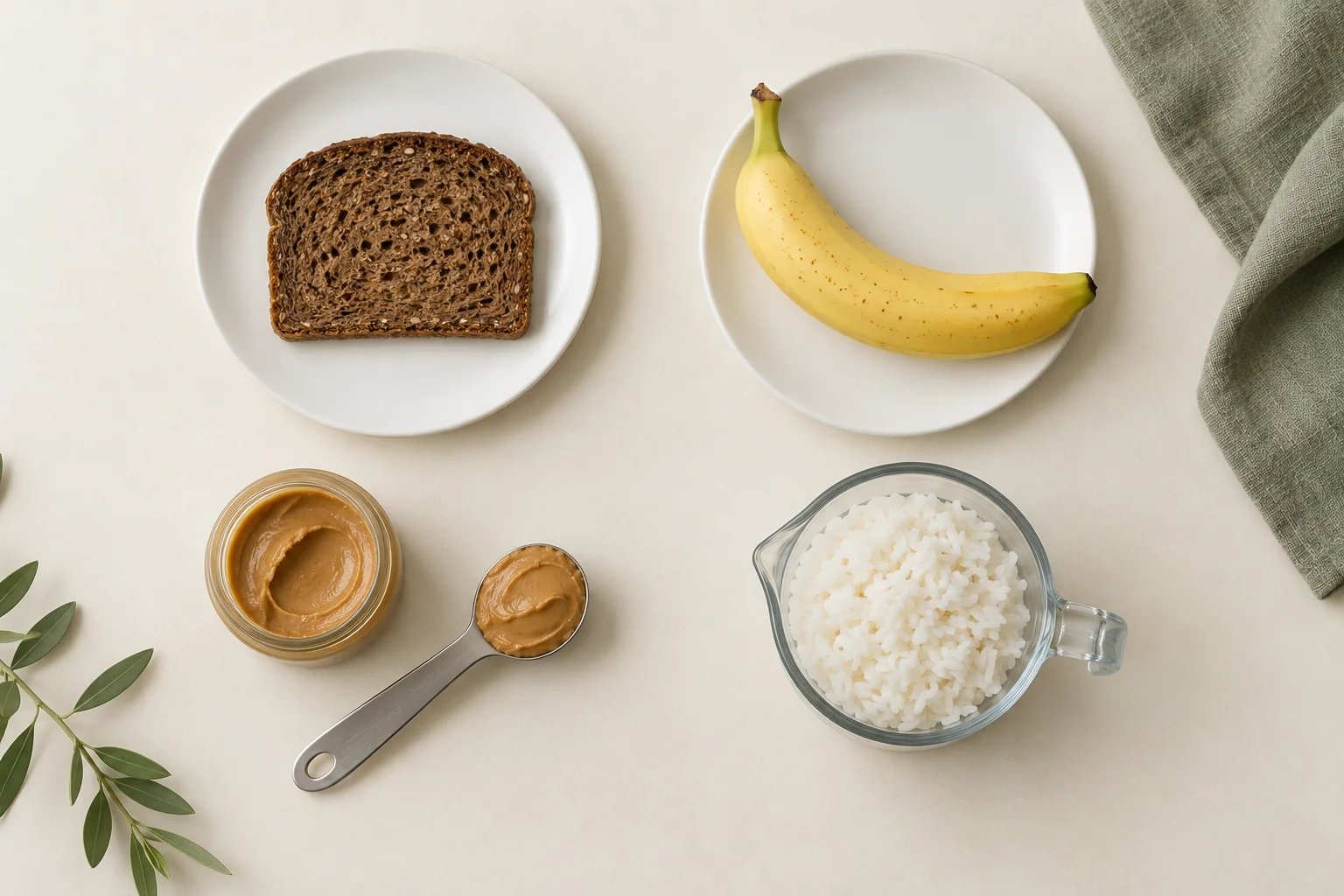
| Portion | Estimated weight | kcal |
|---|---|---|
| 1 slice of rye bread | 35 g | 84 |
| 1 medium banana without skin | 125 g | 109 |
| 1 level tablespoon of peanut butter | 15 g | 83 |
| 1 measuring cup of cooked rice (240 ml) | 192 g | 179 |
Calculation basis: THL Fineli 20.0, downloaded 22 September 2026. Energy and protein are summed before rounding. Products, portions and cooking losses vary. These are recipe estimates, not laboratory measurements or recommended serving sizes. Fineli · CC BY 4.0
Where does uncertainty matter most?
A spoonful can be level or heaped. If the example’s 15 grams of peanut butter were actually 25 grams, it would provide about 138 calories rather than 83. This compares two assumed amounts; it is not a measured uncertainty range for all spoonfuls.
Rice weight depends on cooking and how tightly the cup is filled. Bread thickness, fruit size and peanut butter recipes vary too. Your own product’s label takes priority over a generic example. A picture cannot establish the weight.
Make one familiar meal easy to log
Start with a breakfast you eat regularly. Count the slices, use the same mug and include the spread and drink. You can save the meal name and estimated calories as a Calotank quick choice. Update the number when the portion or product changes.
An estimate remains an estimate even when an app displays a whole number. When you need a more precise portion, weighing helps more than extra guesswork. If tracking becomes stressful, simplify it and consider discussing it with a qualified professional.
Sources and content
- FDA: understanding nutrition labels
- NIDDK: food portions and serving sizes
- THL / Fineli: open food data, release 20.0
Sources checked on 5 October 2026. Text and recipe calculations: Calotank. Images are AI-generated illustrations. Recipes are not presented as test-kitchen measurements. General information, not individual nutrition advice. Creator and corrections.