Three meals with similar energy
The pasta provides about 510 calories, the soup meal 493 and the salad meal 513 per serving. These numbers come from the listed ingredients, not the pictures. The illustrations show meal types; they cannot measure a serving.
Chickpea and tomato pasta
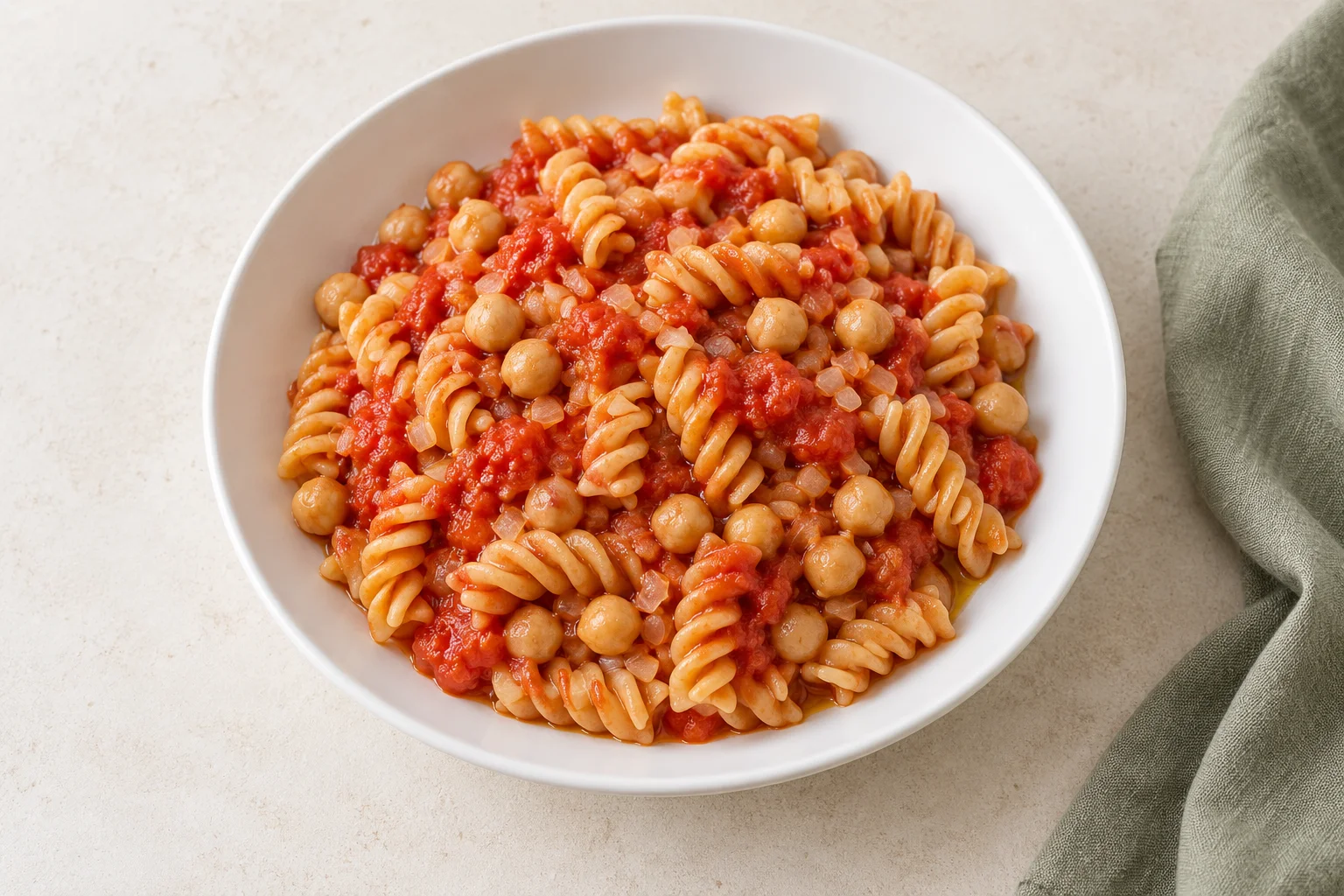
This recipe makes 4 servings.
Ingredients and calculation sources
| Ingredient and amount | kcal | Protein |
|---|---|---|
| Dry pasta, 300 g (3/5 of a 500 g bag) | 1016 | 39 g |
| Chickpeas in water, drained, 480 g (2 × 240 g) | 660 | 40.5 g |
| Chopped tomatoes, 1 can (400 g) | 91 | 2.2 g |
| Onion, about 2 medium (110 g peeled) | 32 | 1.4 g |
| Olive oil, 2 tablespoons (27 g) | 239 | 0 g |
| Total | 2038 | 83.1 g |
Ingredient rounding can cause a small difference between the sum of the displayed rows and the total.
Preparation
Cook the pasta according to its pack and drain. Soften the chopped onion in the oil, add the chopped tomatoes and drained chickpeas, and simmer for about 10 minutes. Mix in the pasta and divide into four equal servings. Season with salt and pepper if desired; extra oil, cheese and bread are not included.
Salmon soup with rye bread
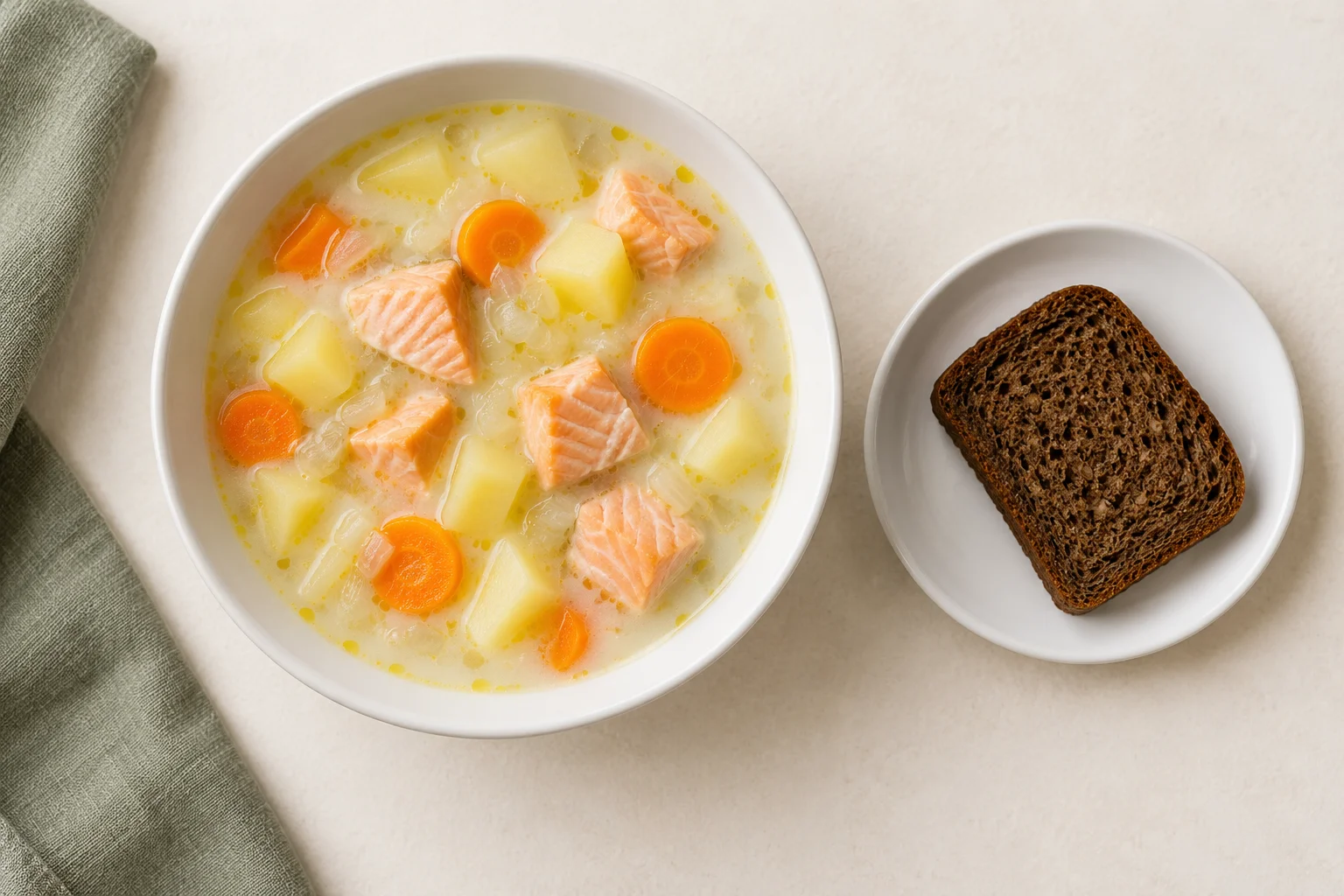
This recipe makes 4 servings.
Ingredients and calculation sources
| Ingredient and amount | kcal | Protein |
|---|---|---|
| Raw salmon fillet, boneless and skinless, 400 g | 904 | 80 g |
| Raw potatoes, peeled, 600 g (about 10 small) | 452 | 11.3 g |
| Carrot, about 2 medium (130 g) | 43 | 0.8 g |
| Onion, about 1 medium (55 g peeled) | 16 | 0.7 g |
| Semi-skimmed milk, 400 ml | 182 | 12 g |
| Olive oil, 1 teaspoon (4.5 g) | 40 | 0 g |
| Rye bread, 4 slices (140 g) | 335 | 10.2 g |
| Total | 1972 | 115 g |
Ingredient rounding can cause a small difference between the sum of the displayed rows and the total.
Preparation
Peel and chop the vegetables. Soften the onion in the oil. Add potatoes, carrots and 600 ml water; cook until nearly tender. Add milk and cubed salmon, and simmer until the fish is cooked through. Add water if needed. Share the fish, vegetables and broth evenly among four servings and give each one slice of bread without spread. Season with salt and pepper to taste.
Tuna and chickpea salad with bread
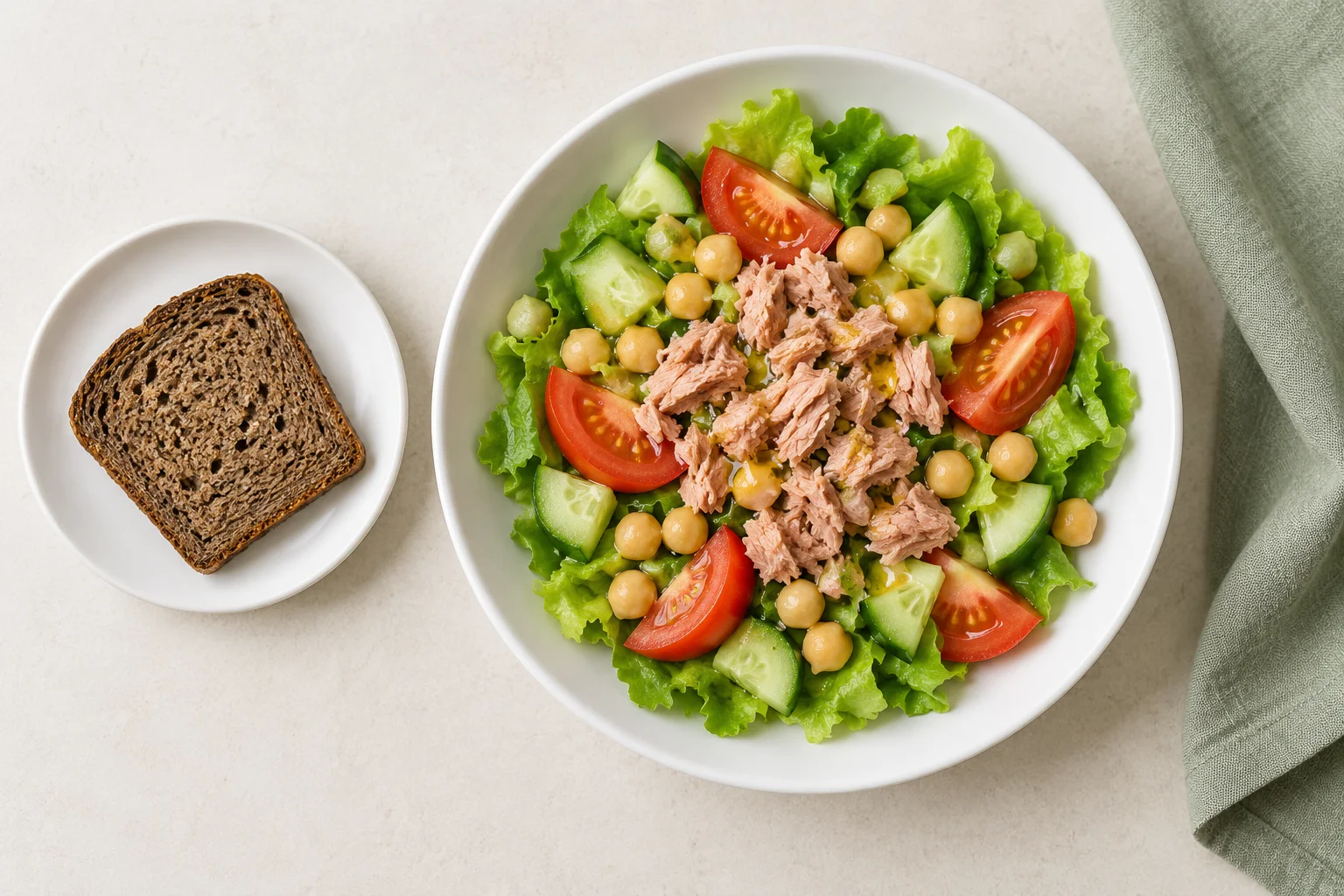
This recipe makes 2 servings.
Ingredients and calculation sources
| Ingredient and amount | kcal | Protein |
|---|---|---|
| Tuna in water, drained, 200 g | 198 | 44.9 g |
| Chickpeas in water, drained, 240 g | 330 | 20.3 g |
| Lettuce, 1 small head (100 g) | 13 | 1.1 g |
| Tomato, about 2 medium (250 g) | 57 | 1.4 g |
| Cucumber, about half (200 g) | 23 | 1.3 g |
| Olive oil, 2 tablespoons (27 g) | 239 | 0 g |
| Rye bread, 2 slices (70 g) | 168 | 5.1 g |
| Total | 1027 | 74.1 g |
Ingredient rounding can cause a small difference between the sum of the displayed rows and the total.
Preparation
Drain the tuna and chickpeas. Wash and chop the vegetables, then mix everything with the oil. Divide into two equal servings and serve each with one slice of bread without spread. Season with salt and pepper to taste; count other dressings or additions separately.
Calculation basis: THL Fineli 20.0, downloaded 22 September 2026. Energy and protein are summed before rounding. Products, portions and cooking losses vary. These are recipe estimates, not laboratory measurements or recommended serving sizes. Fineli · CC BY 4.0
Equal calories do not make meals identical
Broth gives the soup volume. In the salad meal, oil, chickpeas, tuna and bread contribute much of the energy. Dry pasta and chickpeas are major contributors in the pasta. The word “salad” or the area covered on a plate does not tell you the calorie total.
Protein, fibre, taste, dietary suitability and your own hunger are also useful considerations. The protein figure describes this recipe only. Different products, portions and preparation methods change the values.
How a change affects the calculation
One 15 ml tablespoon of olive oil contributes about 119 calories using Fineli’s measure. An extra tablespoon in the two-serving salad adds about 60 per portion if the dressing is shared equally. The meal may look similar while the recipe has changed.
Bread, cheese or a drink each add to the meal. There is no requirement to stay at 500 calories: it is a comparison point, not a rule. Your needs and the rest of your meals should guide how much you eat.
Use the recipe as a starting point
Open the ingredient list, check your packages and adjust the calculation when you substitute products. Dividing a batch into equal portions is easier than trying to match an illustration. The method works whether you cook for two or six.
Save the calories for the portion you ate in Calotank. You can see it within your day and reuse the meal name when you make the same recipe again.
Sources and content
Sources checked on 5 October 2026. Text and recipe calculations: Calotank. Images are AI-generated illustrations. Recipes are not presented as test-kitchen measurements. General information, not individual nutrition advice. Creator and corrections.